
Over the pandemic like most people, I have had a lot of free time. I have taken up a couple of new hobbies and skills. One thing I decided to do was take a free fashion course that was offered by Institut Français De La Mode. I was told about this program by my friend Michelle. She sent me a text and told me to sign up. I also saw it being promoted by the head designer of Jacquemus. Since it was free and I had time I didn’t think it hurt.
For those of you who don’t know, Institut Français De La Mode is a prestigious fashion school for higher education. A highly selective and exclusive school in the heart of the fashion capital of the world, Paris. The school is made to prepare its student for the profesional luxury fashion and business world. Having many top couture programs and connections with brands like Burbery, Chanel, Louis Vuitton, etc. It has also had famous alumni graduate from this school like Yves Saint Laurent, Karl Lagerfeld, just to name a few. This school is the real deal, so a free fashion course from this school, I was not gonna miss the opportunity.
Although I am not done with the course, I am on week 3 at the moment. I have already learned a lot. So I decided to make this blog post on what I learned during the first week of the course that I am taking. The course that I am taking is titled “Understanding Fashion: From Business to Culture.” In the first week they discussed about how fashion is always changing and evolving. In the course they list three ways in which fashion is modern. They classify them as conceptions as each is different from the last. They are the Baudelaireian, Mallarméan and Benjaminian conceptions.
Baudelaireian Conception
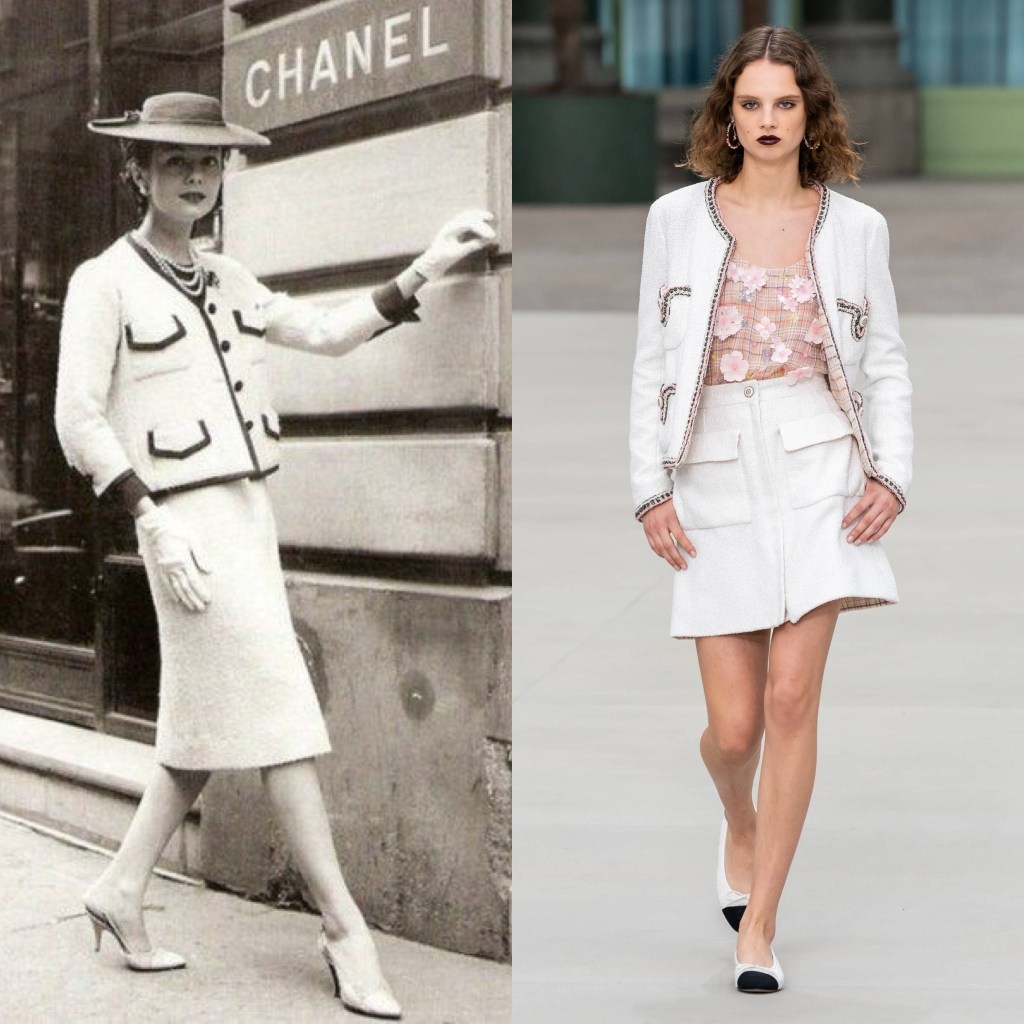
Chanel (1925) ; Chanel (2020)
This conception surrounds the idea of beauty by French poet Charles Baudelaire. He defines beauty as “something that is composed of a fleeting, transformative element, and an infinite, unchanging element—the soul of beauty is that eternal quality, and the body is that transformative element.” To simplify his words, he means that beauty is eternal and even as the time changes the standard of beauty doesn’t.

An example of this conception in fashion can be seen in Chanel. Whenever you think of Chanel you probably think of the famous matching twill suit. See, the Chanel twill suit will forever be iconic because it has stood the test of time. From its first introduction in 1925, to almost 100 years later; the suit is still being shown in its collections to this day. It has the Baudelaireian Conception because even though the times are changing, overall the idea and the style of the suit stay the same. The same material are used, the same silhouette and exclusivity is there. The difference is probably the styling and the length of the suits, going from a more conservative and formal looks to more fun and flirty looks that we’re made iconic by the late Karl Lagerfeld.
Mallarméan Conception

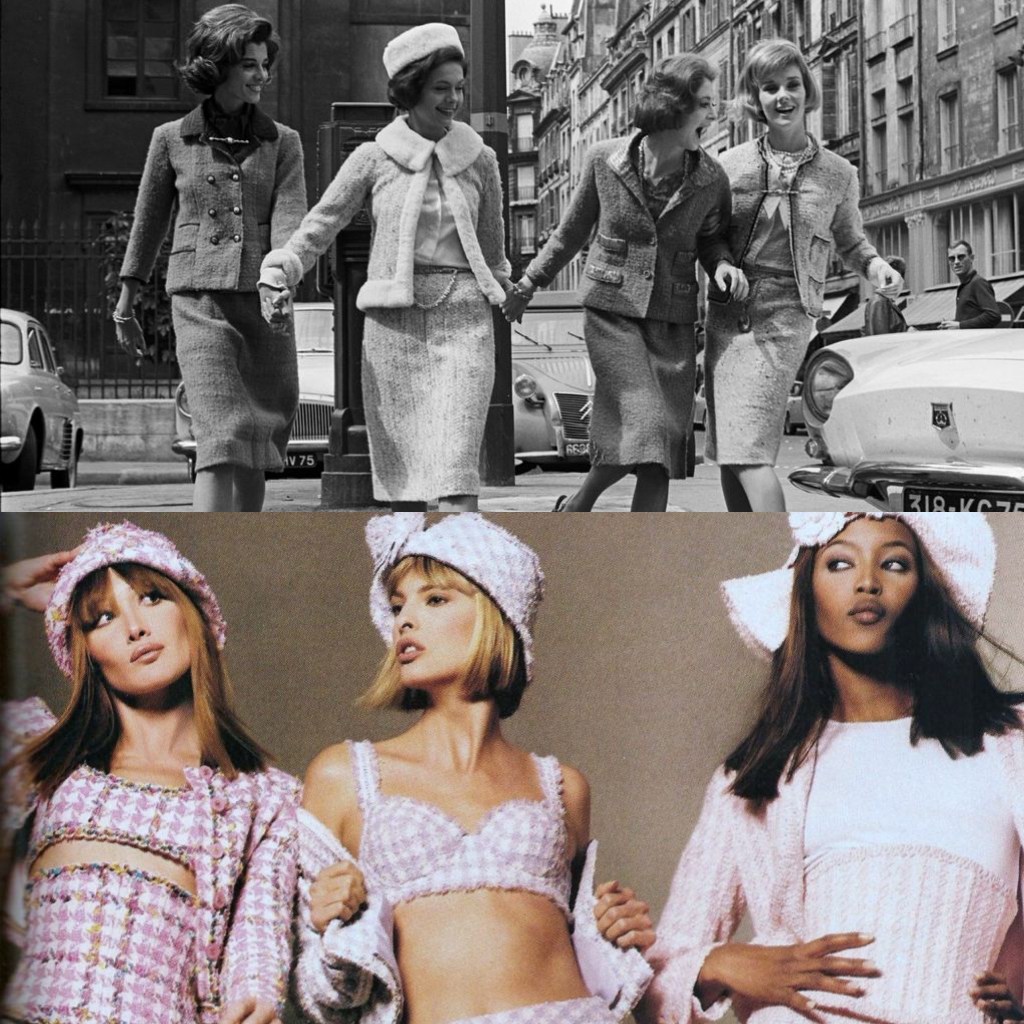
This conception is brought by the French Poet Stéphane Mallarmé. Mallarmé believed that fashion “glorification of the pure instant that no can really seize, because as soon as you try to represent it, it is already gone.” To simplify his words, Mallarmé saw fashion as ever changing and of the time. He saw fashion as a representation of the way society was. Their styles don’t necessarily have an established reputation or references. They are new and fresh and represent the time.

An example of this type of conception can be seen in Vetements. This more you get luxury fashion house was started in 2014. A lot of their clothing can be considered more street wear, as they are very popular in that market. They have the Mallarméan conception because each of their collections is different and they direct various messages throughout their collections. From presenting their shows in common locations like the park and a McDonald’s. To having quirky t-shirts that says ecstasy with the internet explorer to maybe make a social commentary on how the internet can be addicting. This brand lives in the now and knows it’s consumer. You won’t see fitted suits here, more baggy laid back “cool” clothes.

Benjaminian Conception
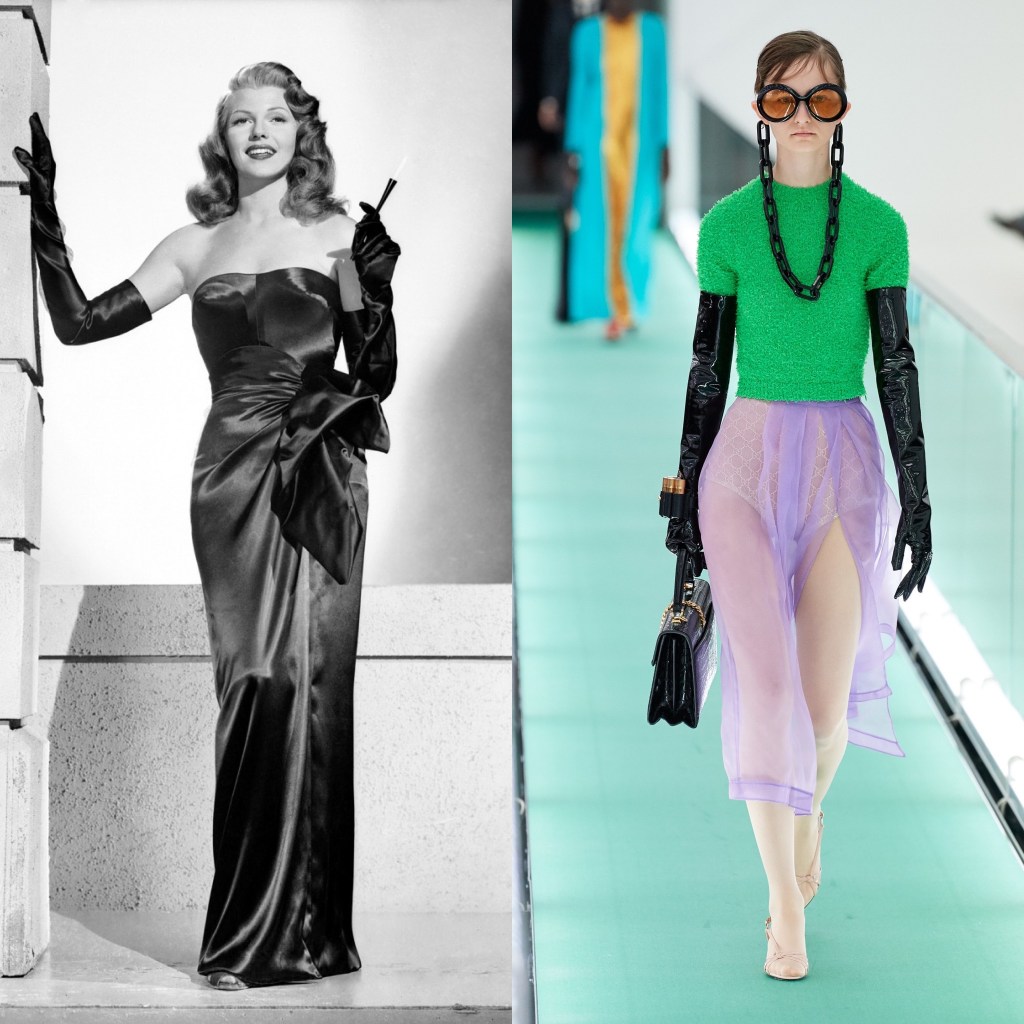
This conception is by German philosopher Walter Benjamin. Benjamin believed that the conception of fashion as a “tiger leap into that with has gone before.” By this he means that fashion has a connection to the past. Nothing is ever “new”, it’s just borrowed and reimagined for the current generation.

This conception can be seen in the fashion of the Gucci brand. While it does keep its ideas new and fresh, it does not shy away from taking inspiration from the past for new collections. Just in the 2020 collection two of the looks channel different eras. (Pictures above) They capture styles from the 1940’s and the 1970’s in just one collection. And a year prior, they took inspiration from Victorian fashion for some of its menswear. Gucci references these times but with their own twist. They make opera gloves out of latex, exaggerate the size of the bell bottom or make a bow more intricate. They do this to make it more modern and more appealing for the customer of today.

Those were the three conceptions of modernity. While these aren’t the only brands that fall into these categories, these were the brands that stand out. Taking this course really helped me understand why certain brands (like the ones mention) have certain aesthetics in their designs. It also helps understand and categorize fashion houses as what type of clothing they make. It helped me realize that these brands aren’t just making clothes their making legacy’s.
Hopefully you liked it and understood it. Lol Which is your favorite conception ?
Hopefully, I’ll try and make a blog post for week 2 of the course and the rest. 😕
 J’s Journal
hey I’ve been taking this course too! So interesting x
LikeLiked by 1 person